Northern Virginia homeowners face unique landscaping challenges. Clay heavy soil, humid summers, cold winters, and seasonal storms all influence what plants thrive and how outdoor spaces should be designed. Understanding the local planting zone, selecting plants that grow well in the region, and applying proven landscape design principles can make the difference between a yard that struggles and one that thrives year round.
What Planting Zone Is Northern Virginia
Northern Virginia falls primarily within USDA Plant Hardiness Zones 7a and 7b. These zones represent the average annual minimum winter temperature and help determine which plants can survive the winter climate.
For homeowners, this means plants must tolerate winter temperatures between 0 and 10 degrees Fahrenheit while also handling hot, humid summers. Selecting plants suited for these conditions ensures long term success and reduces plant replacement costs.
What Grows Well in Northern Virginia
Because of the region's climate and soil conditions, certain trees, shrubs, and perennials perform particularly well in Northern Virginia landscapes.
Popular Trees
Eastern Redbud
Crepe Myrtle
Dogwood
Red Maple
Reliable Shrubs
Boxwood
Hydrangea
Azalea
Inkberry Holly
Perennials and Groundcover
Black Eyed Susan
Hosta
Daylily
Liriope
Native plants are especially valuable because they are naturally adapted to local soil and climate conditions. They typically require less water and maintenance while supporting pollinators and wildlife.
The Rule of 3 in Landscaping
The rule of three is a classic landscape design principle used by professional designers to create visual balance and natural flow.
Instead of planting single isolated plants, landscaping elements are grouped in odd numbers, most commonly groups of three. This approach creates a fuller, more natural appearance and prevents landscapes from looking overly symmetrical or rigid.
For example, instead of planting one shrub at the corner of a garden bed, a designer may group three shrubs together. This grouping adds depth, improves visual structure, and creates a more cohesive landscape design.
What Is the Most Expensive Part of Landscaping
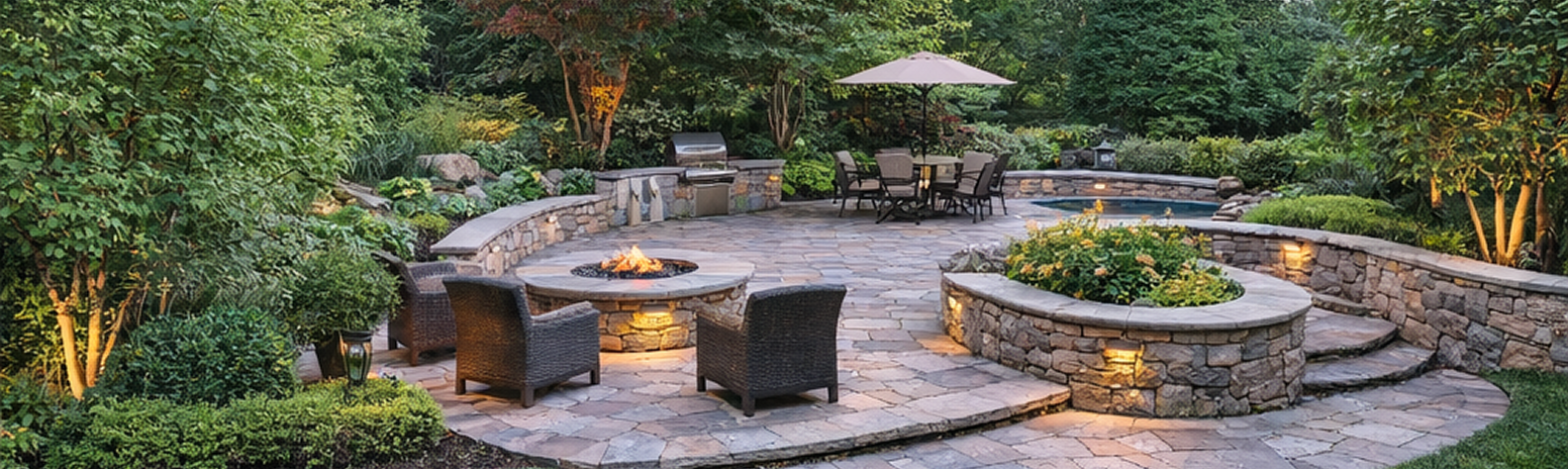
The most expensive portion of landscaping projects is typically hardscape construction. Hardscaping includes structural elements such as patios, retaining walls, outdoor kitchens, fire pits, walkways, and seating areas.
These features require excavation, grading, materials such as natural stone or pavers, and professional installation. Because they are permanent structures, they also require proper drainage planning and engineering.
While hardscape elements often represent the largest investment, they also add significant value to a property by expanding usable outdoor living space.
Designing a Landscape That Thrives in Northern Virginia
A successful Northern Virginia landscape combines climate appropriate plants, thoughtful design, and durable outdoor living features. By understanding the region's planting zone and selecting plants that thrive locally, homeowners can create landscapes that are both beautiful and sustainable.
At Sunrise Landscape and Design, our team designs and builds outdoor environments specifically suited to Northern Virginia's climate and soil conditions. From plant selection to outdoor living construction, every project is designed to support long term landscape health and property value.
Related reading: The Benefits of Native Plants | Designing with Color in Mind | Top 10 Plants for Your Garden